Aslan
The Last BattleAslan is the true Lion and maker of the order the Ape tries to counterfeit: neither a tame instrument of the stars nor a name that can be merged with Tash. In the final crisis, his apparent absence gives fraud room to flourish, but his eventual arrival reveals both the limits of coercion and the deeper reality beyond the dying Narnia. His judgment separates creatures by their response to him, while his welcome of Emeth shows that honest goodness is not confined by the name under which it was offered.
Identity and the False Aslan
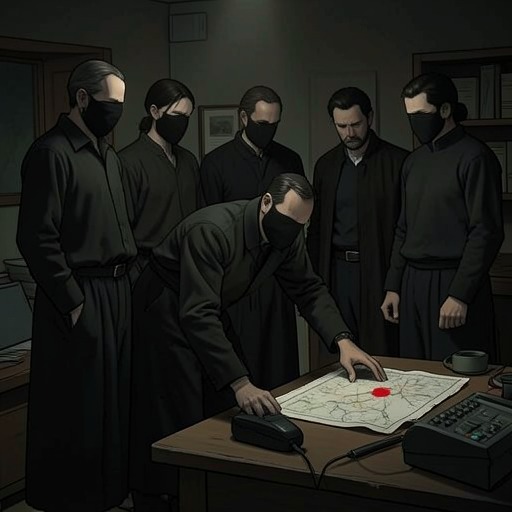
Aslan is invoked throughout Narnia as the authority behind its moral order, yet the crisis turns on the distance between the real Lion and the figure imposed upon the animals. Puzzle fears that the real Aslan might appear and expose the deception; Shift answers that Aslan probably sent the lionskin to help them set matters right and adds that he never appears nowadays. The lie thus begins by appropriating Aslan’s name and explaining away the possibility that the true Aslan might contradict it.
Jewel challenges the despair bred by predictions about the stars. Even if the stars foretell that Aslan will not come, Jewel argues, Aslan is their maker rather than their servant; old stories call him no tame lion. Tirian recognizes the phrase as a truth repeated in many tales. Its force is not merely that Aslan may arrive unexpectedly: it denies that any forecast, ruler, or institution can command him.
The Ape turns that same idea upside down. He claims that Aslan has been too soft with the animals, will now force them into obedience, and will teach them to think he is a tame lion. He then claims exclusive access to Aslan, presenting himself as the only interpreter through whom the animals may hear what they must do. The contradiction is telling: the real Aslan’s freedom becomes the excuse for the Ape’s unaccountable power.
When a Lamb asks how Aslan could be friends with Tash, whose followers sacrifice people, the Ape does not answer the moral challenge. He spits at the Lamb, dismisses it as childish, and declares that Tash and Aslan are merely two names for the same being. The animals recognize the question as the best one asked so far, but the Ape substitutes forced equivalence for an explanation. This false doctrine erases the distinction between Narnia and Calormen and makes the Ape’s political accommodation appear sacred.
Apparent Absence and the Crisis of Faith
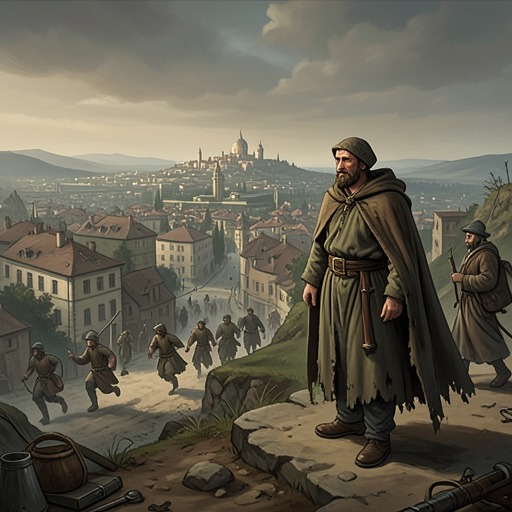
The animals’ suffering shows how completely the counterfeit account reshapes their understanding. Two mice say they have seen the figure presented as Aslan ordering the killing of Wood-Nymphs and the enslavement of Narnia under the King of Calormen. They had wanted Aslan to return; now they fear that he has come back angry and is punishing them for an unknown wrong. Their bewilderment is not abstract: the name they trusted has been attached to acts that make them feel abandoned and guilty.
Tirian also encounters silence at the moment he most needs help. He calls on Aslan to save Narnia, offers his own life in exchange, and asks for helpers from beyond the world. The darkness, cold, and stillness do not change. Yet the unanswered prayer alters something within him: he feels faint hope and new strength, and asks that his voice might carry beyond the world. The scene holds divine silence and inwardly sustained courage together instead of treating one as proof that the other is false.
At the Stable, the animals’ fear gathers around the door. Jill wonders whether the terrible being they saw might be inside; Tirian cannot rule out Tash, but tells her that they are all between the paws of the true Aslan. The image makes trust a stance taken amid uncertainty, not knowledge of what waits beyond the threshold. Ginger then offers to enter, while the animals who had clamoured to see Tashlan back away from the Stable.
Judgment, Welcome, and the Door
When Aslan finally appears, the earth trembles, the air grows sweeter, and brightness flashes behind Tirian and his companions. Tirian sees the golden Lion as his heart’s desire. The others kneel around Aslan’s forepaws, burying their hands and faces in his mane as he touches them with his tongue. Aslan fixes his eyes on Tirian, who approaches trembling and flings himself at the Lion’s feet. Aslan kisses him and calls him the last King of Narnia who stood firm at the darkest hour, recognizing steadfastness through the collapse of the kingdom.
Aslan’s response to the Dwarfs is more severe because their condition cannot be corrected by force. When Lucy asks him to help them, he says he will show what he can and cannot do. He growls, but they interpret the sound as a trick or machine and dismiss it as a deception. They later fight over food, smear it over themselves, and insist that there is no humbug and that the Dwarfs are for the Dwarfs. Aslan explains that they have chosen cunning instead of belief; their prison is in their own minds, but they remain imprisoned because fear of being deceived prevents them from accepting help.
Aslan then turns to the Stable door and commands time to begin. His call grows from a roar to a cry loud enough to shake the stars, and the door flies open. This threshold does not simply reveal a safe enclosure beyond a dangerous world: it opens onto the final reckoning and the passage into a reality larger than the visible Narnia. The Dwarfs remain shut within their misapprehension even as the others follow Aslan through the door.
The End of Narnia and the Real Country
Beyond the door, the company witnesses the stars being called home. The spreading dark in the sky is not a cloud but the emptiness left as the stars depart; those stars are people, and they descend in silver brilliance to stand behind Aslan’s company. Aslan’s authority extends beyond the land and its rulers to the cosmic order itself. When the sun and moon meet in a catastrophic conflagration, he tells the giant to make an end. The giant crushes the sun, plunging the world into darkness, and Aslan tells Peter to shut and lock the door.
The decisive end is not represented as a painless triumph. Once the door is closed, the company finds itself in warm daylight, beneath a blue sky and among flowers, while Aslan’s eyes hold laughter. But Lucy insists that it is right to mourn what lies dead and frozen behind the door. Jill had hoped Narnia might last forever; Digory remembers that he saw it begin; Tirian says that Narnia is the only world he has known and that it would be discourteous not to grieve. Their sorrow accompanies their trust rather than displacing it.
Digory explains that the Narnia which has ended had a beginning and an end: it was a shadow or copy of the real Narnia, which has always existed and always will. The dear creatures and all that mattered in old Narnia have been drawn through the door into the real Narnia. The new country is not merely a restoration of the old one, but its deeper reality, as waking life is deeper than a dream. Thus Aslan’s ending of the world answers the loss without denying that the loss was real to those who loved it.
Emeth and the Meaning of Service
Emeth’s encounter with Aslan makes the distinction between the real Lion and Tash explicit. After entering the Stable, Emeth discovers sunlight and a wide country, fights and kills a man guarding the entrance, and begins to seek Tash, believing he may have reached Tash’s country. Instead he meets a great Lion whose speed, size, golden hair, and brightness overwhelm him. Emeth expects death because he has served Tash, yet he considers seeing the Lion worth that risk.
Aslan welcomes Emeth and tells him that the service he has done to Tash counts as service to Aslan. He rejects the claim that the two are one: because they are opposites, a vile deed cannot truly be done to Aslan, nor a deed that is not vile to Tash. A person who keeps an oath for the sake of the oath has, without knowing it, truly sworn by Aslan; a person who commits cruelty in Aslan’s name serves Tash instead. The measure is the moral character of the act, not the label attached to it.
Emeth admits that he had sought Tash all his days, but Aslan answers that he would not have sought so long and truly unless his desire had been for Aslan. He then breathes upon Emeth, steadies him, and tells him that they will meet again and that he must go further up and further in. The welcome does not make Aslan and Tash interchangeable; it reveals that sincere longing and good service may reach the truth even when a seeker has misunderstood its name.
The Beginning Beyond the Ending
Aslan’s last appearance turns the end of Narnia into the beginning of a larger story. He comes leaping down the many-coloured cliffs like a living cataract of power and beauty, and the first person he calls is Puzzle. The donkey looks feeble and small beside him; Aslan whispers to him, first lowering his ears and then making them perk up, though the humans cannot hear the words. This private exchange offers a moment of personal attention within the vast final scene, without disclosing what Aslan says.
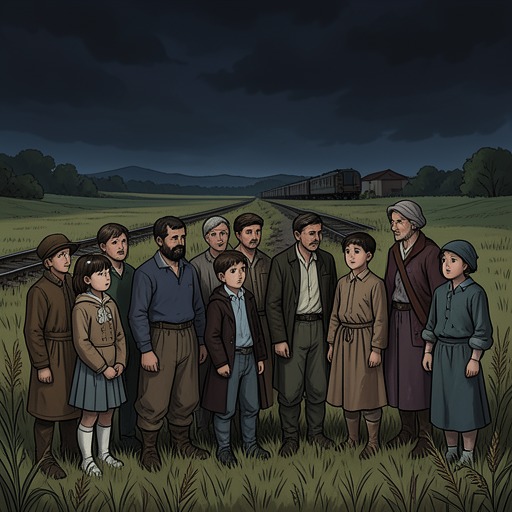
The human companions fear that Aslan may send them away, as he has sent them back to their own world before. He tells them there is no fear of that and reveals that a real railway accident has killed them all. In the language they once used for the Shadow-Lands, the term is over and the holidays have begun; the dream has ended and morning has come. Aslan no longer looks like a lion as he speaks, and what follows exceeds the narrator’s power to describe.
The narrator calls this not the conclusion of the companions’ lives but the beginning of the real story: their life in the other world and their adventures in Narnia were its cover and title page. Aslan’s role therefore reaches beyond rescue or kingship. He is the one before whom the creatures’ choices become visible, who welcomes those whose good actions were imperfectly understood, and whose country makes an ending open onto an unending life.